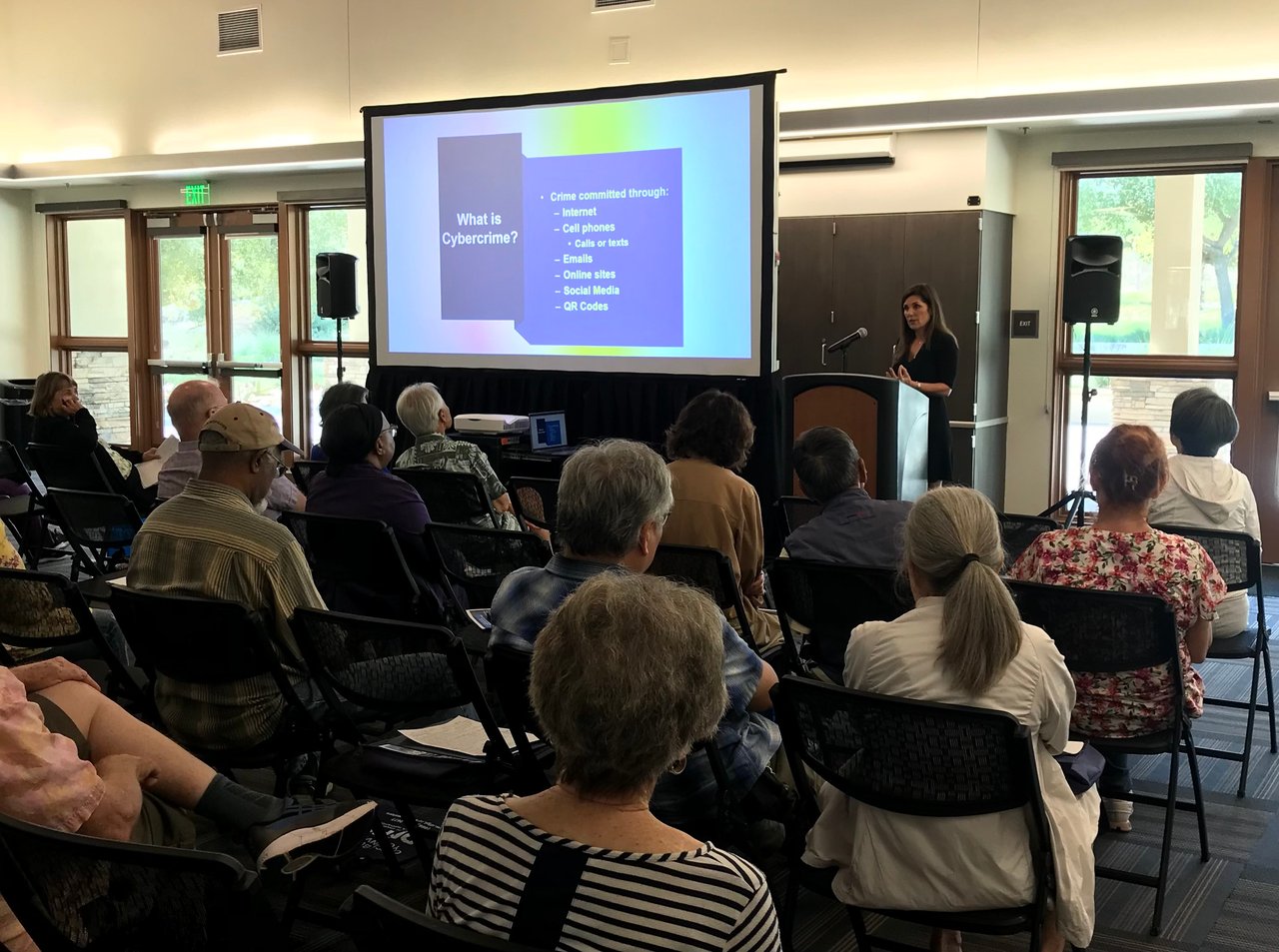
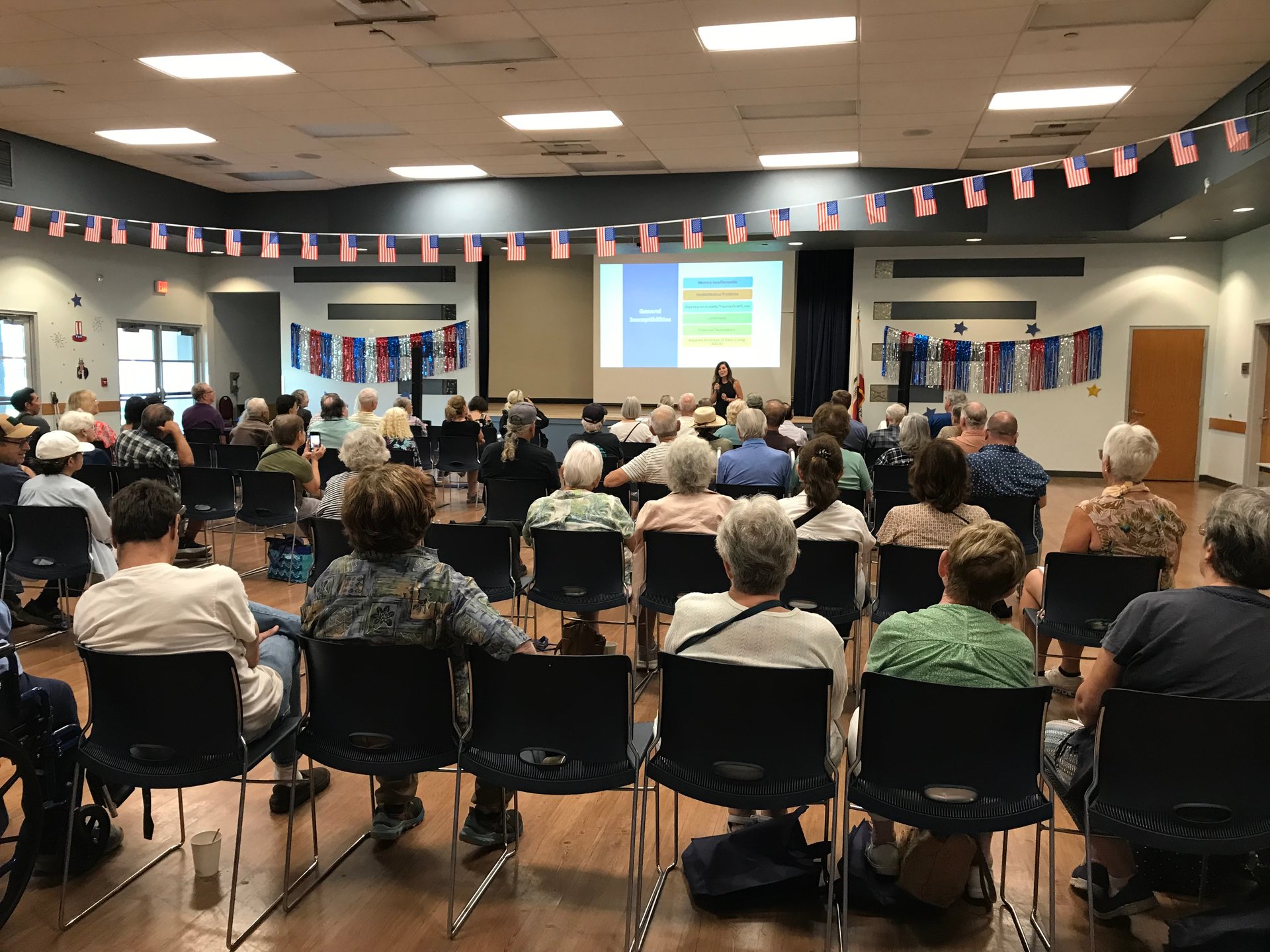
Over the past several months, I have had the opportunity to speak to seniors throughout Orange County about fraud and scams as part of the Council on Aging Southern California’s Financial Abuse Specialist Team (FAST).
One thing has become very clear to me through these presentations:
Trying to keep up with every new scam is almost impossible.
The technology changes. The stories change. Scammers are now using artificial intelligence, cloned voices, convincing emails, text messages, QR codes and other tools that can make something fraudulent look surprisingly legitimate.
But underneath all of that, most scams still rely on many of the same tactics.
That is what I want people to learn to recognize.
Four things I want you to watch for
In my presentations, I break scams down into four areas:
CONTACT. VALUE. INFORMATION. PRESSURE.
CONTACT: How did this person reach you?
Did you initiate the conversation, or did they?
Be cautious when someone unexpectedly contacts you by phone, text, email, social media or even at your front door.
Scammers frequently impersonate people and organizations we already trust. Your bank. A government agency. A utility company. A well-known business. Even a family member.
Caller ID, an email address or a familiar-looking logo should not be enough to convince you that the person contacting you is legitimate.
VALUE: What do they want from you?
Usually, there is something of value at the center of the conversation.
Money is the obvious one, but it could also be gift cards, cryptocurrency, access to an account or some other form of payment.
Sometimes the request is disguised as an opportunity. You won a prize. You are entitled to a refund. There is an investment you cannot miss.
Other times it is frightening. You owe money. Your account has been compromised. Someone you love is in trouble.
Different story. Same goal.
They want you to give them something of value.
INFORMATION: What are they asking you to reveal?
Not every scammer asks for money immediately.
Sometimes what they really want is information.
Your Social Security number. Bank information. Passwords. Verification codes. Medicare information. Account numbers. Personal details that can later be used to impersonate you or access your accounts.
A request for information deserves the same caution as a request for money.
PRESSURE: Are they trying to stop you from thinking?
This is one of the biggest red flags.
You have to do this right now.
Do not hang up.
Do not tell anyone.
Your account will be closed.
Your grandchild is in trouble.
The police are coming.
The opportunity will disappear.
Pressure works because it moves us out of logical thinking and into an emotional response.
And scammers know that.
AI has made one old scam especially convincing
One example I discuss in my presentations is the familiar grandparent scam.
Years ago, someone might call and say, “Grandma, I am in trouble.”
Today, artificial intelligence can potentially make that call much more believable by imitating a person's voice.
That is why recognizing the story is no longer enough. The voice may sound familiar. The message may look legitimate. The person may know information about your family.
The red flags still matter.
Unexpected contact. A request for money or information. Urgency. Secrecy.
My simplest advice: Break the contact
When something feels wrong, you do not have to figure out whether it is a scam while the person is still talking to you.
Hang up. Close the email. Stop texting. Do not click the link.
Then verify independently.
If someone says they are calling from your bank, call the number on the back of your bank card.
If someone says they are from a government agency, look up the agency yourself.
If a family member supposedly needs money immediately, call that person or another family member directly using a number you already have.
And if someone tells you not to talk to anyone else about what is happening, that should make you even more determined to do exactly that.
One more rule I want people to remember
Do not scan a QR code you did not go looking for.
QR codes have become so common that most of us scan them without thinking. Fraudulent QR codes can direct you to convincing fake websites designed to collect payment or personal information.
Slow down and consider where the code came from before opening it.
There is no embarrassment in being targeted
This may be the most important message I share during these presentations.
Scammers are professionals at manipulating people. They deliberately create fear, excitement, urgency or concern because those emotions can cause any of us to act before we think.
Being intelligent, educated or financially sophisticated does not make someone immune.
If something happens, tell someone.
The sooner a bank, financial institution, family member or appropriate authority knows what happened, the sooner steps can be taken to try to limit the damage.
And if you remember nothing else from this article, remember these four words:
CONTACT. VALUE. INFORMATION. PRESSURE.
You do not have to recognize every scam.
You just have to recognize when something does not feel right, stop the interaction and give yourself time to verify it.